A prince trampled by an elephant. A queen who could not be consoled. A king who brought water from 51 holy rivers to save his son’s soul.
(What the elephant statue actually represents – and what the locals whisper)
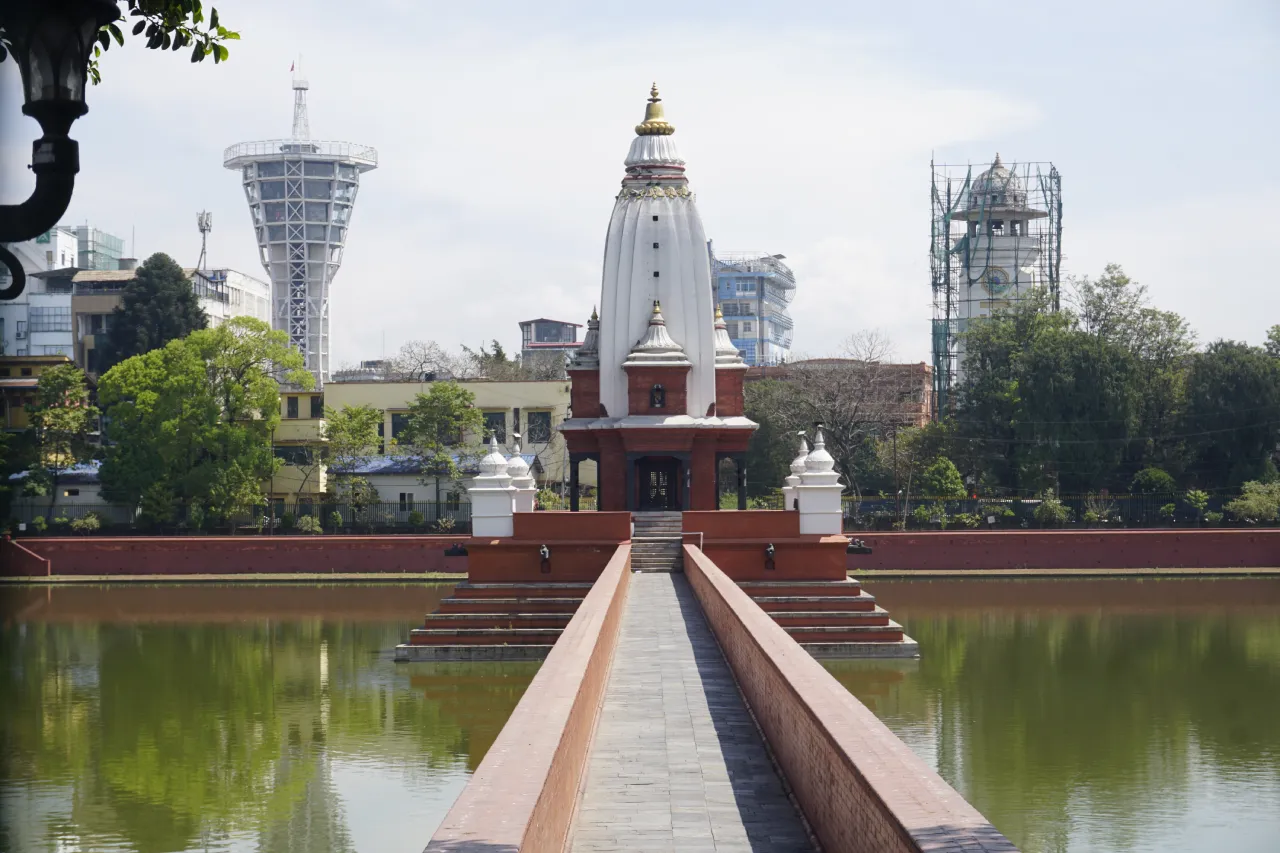
Three centuries. One locked gate. And a queen who never stopped crying.
A prince was trampled by an elephant.
His name was Chakravartendra Malla, the youngest son of King Pratap Malla. He had been crowned just days earlier. Coins were minted in his name. The court celebrated. Then, while playing near the palace animal, the elephant killed him.
Queen Anantapriya could not be consoled. She had lost her youngest born, her boy, her future. She drowned in a grief no one could reach.
Her husband, King Pratap Malla, watched her waste away. So he built her a pond.
He brought water from 51 sacred rivers – Gosaikunda, Muktinath, Kedarnath, Badrinath. He poured it into the tank to sanctify it, to ensure his son’s soul would not wander. He designed the entire pond as a swastika yantra, a tantric mandala for peace and liberation.
He called it Nhu Pukhu – “New Pond.”
But the people of Kathmandu called it something else. Rani Pokhari. The Queen’s Pond.
And over the centuries, stranger stories began to cling to the water like mist.
Chapter 1: The Prince Who Died Too Soon
The year was 1668.
King Pratap Malla, one of the most powerful and eccentric rulers of Kathmandu, had declared his youngest son Chakravartendra the king. Coins were minted in the boy’s name. The court celebrated.
Then, just days after his coronation, Chakravartendra was playing near an elephant. The animal killed him.
Some whispered that the symbols on the new coins – a bow and arrow, considered ominous – had caused the death. Those coins were later used only for the speedy delivery of a child, never again for royal ceremonies.
Queen Anantapriya was inconsolable. She had lost her youngest born, her son, her future. The king, watching his queen waste away from grief, decided to act.
He consulted his spiritual adviser, Swami Gyanananda. He studied ancient scriptures. And he began to build.
Chapter 2: A Pond Filled with 51 Sacred Waters
The pond took shape in the northern part of the city, near the royal palace.
It was not an ordinary tank. Pratap Malla ordered water to be brought from the holiest sources in Nepal and India: Gosaikunda, where Shiva is said to have thrust his trident into the earth; Muktinath, the sacred pilgrimage site of the Himalayas; Kedarnath and Badrinath, the great temples of the north. The Bagmati alone contributed over 1,600 pots of water. The Ganga from Varanasi, the Gandaki, the ocean itself – all were poured into the pond.
An inscription from N.S. 790 (1669 CE) records every source. It was the king’s way of ensuring that his son’s soul would not wander, that the sacred waters would carry him to peace.
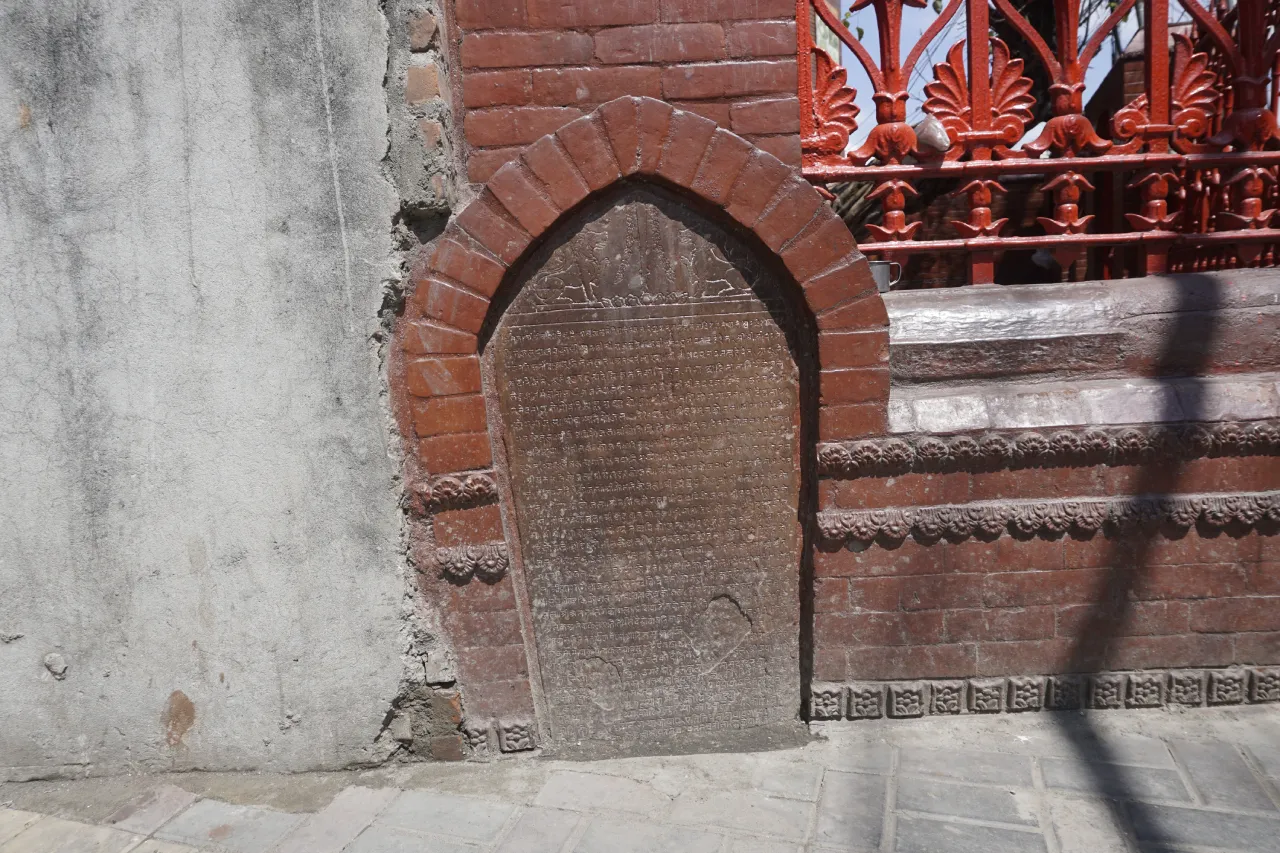
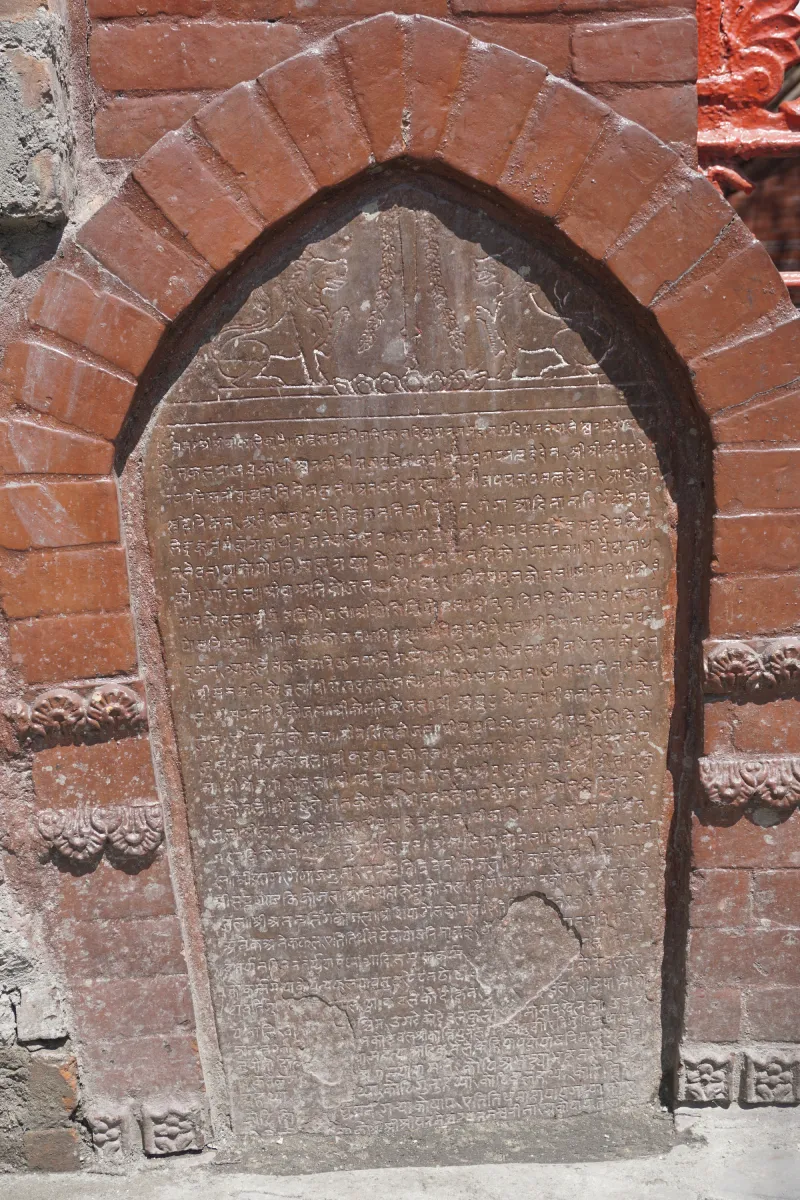
The pond was consecrated in 1669. The king named it Nhu Pukhu – New Pond.
But the queen’s grief had not gone unnoticed. The people of Kathmandu, watching their king build this magnificent tribute, began calling it by another name.
Rani Pokhari. The Queen’s Pond.
Chapter 3: The Inscription That Warns of Ten Million Sins
Four inscribed stones were placed at the four corners of the pond. Three remain today. One is in the grounds of Bir Darbar. Another is near Bir Hospital. The third – Stone A – lies where Kanti Path meets Jamal Road, half-buried near the skybridge below Bishwajyoti Mall.
The inscription is written in three languages: Sanskrit, Nepali, and Newari. It begins with the list of 51 sacred waters. Then comes the penalty clause – not a curse, but a religious legal warning:
“If anyone commits any sin against the lake – digging within its precincts, polluting its waters – the sins shall be upon his head: the sin of killing ten million Brahmins, ten million cows, ten million women, ten million children, and destroying ten million Shiva lingams.”
The witnesses are called: the Sun, the Moon, Fire, Earth, Water, Sky, Wind, Death, Day, Night, Evening, Faith – and five Brahmins, five Pradhans, and five Khas Magars.
This was medieval law. In a time before police and fines, karma was the only deterrent that worked.
The stone was supposed to protect the pond forever. Today, it is half-buried. The skybridge above it was built without anyone noticing the warnings below.
Chapter 4: The Temple of Parameshwor Parameshwori
At the center of the pond stands a temple. Most people call it Bal Gopaleshwor today. Some call it Yamaleshwor, or Harishankari, or Gaurishankar.
But the king’s own inscription names it clearly: Parameshwor Parameshwori.
The temple was built in the granthakut (shikhara) style – a tall, mountain-shaped spire that represents the peak of Mount Meru, the center of the Hindu universe. Inside the sanctum, a shivalinga is enshrined. At the northern niche, a stunning image of Harishankari – the conjoint form of Vishnu and Shiva – stands with six heads, six hands, and a terrifying beauty that marks it as one of the finest medieval sculptures in the valley.
Around the main temple, at the four corners of the pond’s inner precinct, smaller shrines contain terracotta images of Mahakali, Nataraj, Mahagauri, and Bhairavbhairavi. These are not peaceful deities. They are raudra – fierce, powerful, adorned with skulls and snakes. They are guardians. They are warnings.
The king designed the entire pond as a swastika yantra – a tantric mandala. The double series of swastikas, the placement of deities facing specific directions, the fierce expressions and powerful emblems – all of it was calculated. The goal: to free his son’s soul from wandering, to protect his clan from future harm, and to ensure that no mishap would ever again befall his family.
Chapter 5: The Elephant Statue – King, Sons, and a Shivalinga
On the south bank of Rani Pokhari stands a large stone elephant.
Look closely. There are figures on its back. Mainstream history, confirmed by epigraphic records and scholarly research, identifies them as King Pratap Malla and his two sons – Chakravartendra (the one who died) and Mahipatendra. The elephant’s trunk holds a shivalinga, a symbol of Lord Shiva.
The king placed it here as part of the pond’s design – a guardian, a memorial, a reminder of the son he had lost to an elephant’s foot.
But the people of Kathmandu tell a different story.
Chapter 6: The Legend (Not History)
This is not historical fact. It is local lore.
There is a story that has been told around Rani Pokhari for generations. It is not recorded in inscriptions. It is not accepted by mainstream historians. But it persists.
The story goes that the king’s health began to decline after the pond was built. He had been visiting the temple daily, performing his rituals, bathing in the sacred water. But something was draining him.
The court tantric discovered the cause: the king had become entangled with a Kichkanya – a female spirit of the cemetery, said to have backward feet. She had taken the form of a beautiful woman. The king, known for his romantic liaisons, had fallen into her trap.
A maulavi (Muslim healer) was summoned. According to the legend, he subdued the spirit, and the elephant statue was made to press something – a shivalinga, some say; the spirit itself, others claim – into the ground.
The story is dramatic. It makes for good telling. But the stone elephant’s own inscription identifies the figures as the king and his sons. The trunk holds a shivalinga, not a ghost.
Scholars like Dr. Sandhya Khanal Parajuli have documented the legend but do not present it as historical fact. It is, at best, a folk explanation for a statue whose original meaning had been forgotten.
Take the story for what it is: a whisper from the past, not a record.
Chapter 7: The Temple That Opens Once a Year
Today, the temple at the center of Rani Pokhari is called Bal Gopaleshwor. It is not open to the public.
Most days, the gates are locked. The temple opens once a year – on Bhaitika, the second day of Tihar.
On that day, sisters come to bless their brothers. They walk the causeway that connects the western bank to the temple. They enter the shrine. They perform their rituals. They leave.
The next morning, the gates are locked again.
There is something fitting about this. A pond built by a grieving mother. A temple that opens only for the blessing of brothers by sisters. The queen’s son was lost. Perhaps, on Bhaitika, somewhere in the quiet of that locked temple, his memory is still held.
Chapter 8: The Plan That Died
In 2019, Kathmandu’s mayor proposed a “modernization” of Rani Pokhari.
The pond would be cleaned – everyone agreed on that. But the plan went further. Concrete walkways. Commercial spaces. A “vibrant public plaza” where tourists could sit at cafes, eat at restaurants, and spend money.
The public pushed back. UNESCO raised concerns. The plan died.
So today, Rani Pokhari sells nothing. It does not even want you to exercise.
Here is the question this blog asks you – not as a historian, but as a traveler:
Would you have preferred the cafes?
You are standing at the locked gate. You cannot enter. The temple opens once a year. As a tourist, this is frustrating.
Now imagine the alternative. The version with the promenade and the string lights and the coffee shop by the water. Which version do you want?
There is no right answer. But the people of Kathmandu already answered. They chose the locked gate. They chose a pond that most visitors cannot enter, over a plaza that everyone could.
They chose the queen’s grief over the souvenir stall.
Chapter 9: The Pond Today – Open, But Only Just
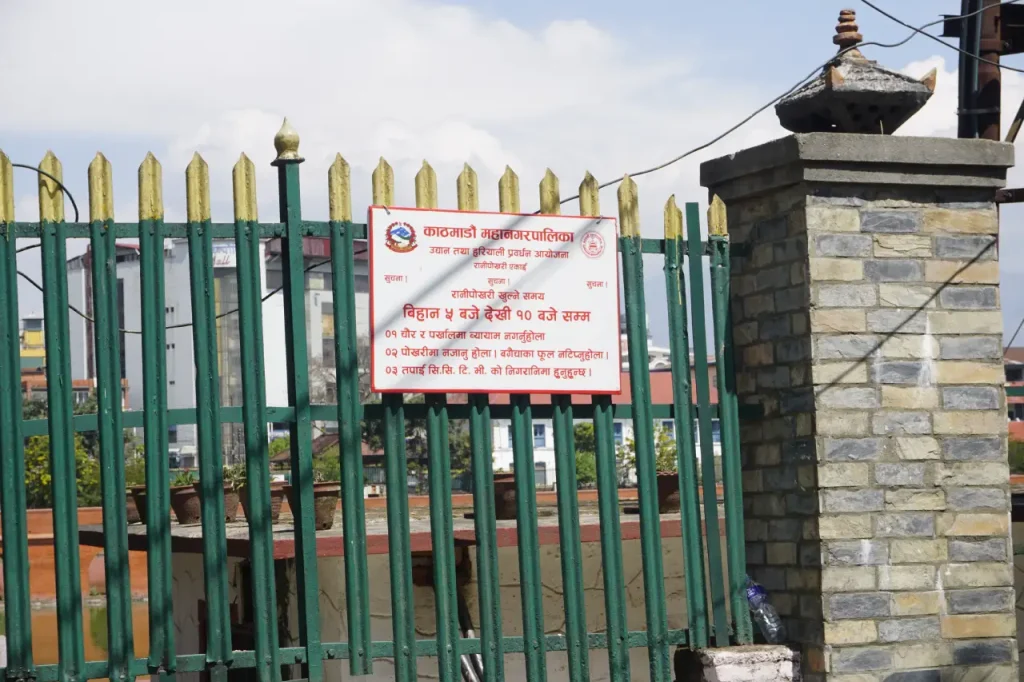
This is the first thing you see when you approach Rani Pokhari.
Not a welcome sign. Not a historical plaque. A list of prohibitions.
Read it carefully:
- Open from 5 AM to 10 AM only. That is five hours – and only in the morning.
- Do not exercise on the field.
- Do not go into the pond.
- Do not pluck flowers from the garden.
- You are under CCTV monitoring.
This is not a heritage site that welcomes visitors. It is a space that tolerates local morning walkers but trusts no one else. The rules are written as restrictions, not invitations. The camera is always watching.
The temple – Bal Gopaleshwor – is even more restricted. It opens once a year.
The pond itself? You cannot touch it. You cannot bathe in it. You cannot offer prayers at its edge. The water that was once filled with the sacred Ganga, the Bagmati, the Gandaki, the ocean itself – now sits behind a fence, watched by cameras.
This is what remains of the queen’s pond.
Chapter 10: The Temple’s Many Names and the 2015 Earthquake
The temple at the center of Rani Pokhari has had a difficult life.
The original granthakut (shikhara) style temple stood for nearly two centuries. A sketch from 1845 shows it as a tall, mountain-shaped spire – beautiful, elegant, distinctly Nepali.
Then in 1851, Jang Bahadur Rana rebuilt it in a gumbaja (dome) style. The scholar T.W. Clark later called it “the present ugly brick-and-plaster structure.” It was not a compliment.
That Rana-era temple survived the great earthquake of 1934, was renovated by Juddha Shamsher, and then fell to the 2015 earthquake that devastated Kathmandu.
The temple was rebuilt again – this time, returning to its original granthakut (shikhara) style. The new temple was completed in 2021. It stands today, a quiet nod to the pre-Rana past.
The water was refilled. But the gates stayed locked.
Epilogue: What Remains
Queen Anantapriya never stopped crying. Not really. The pond her husband built for her held 51 sacred waters, but it could not hold her grief.
The king designed the pond as a swastika yantra – a tantric mandala for peace and liberation. He placed images of fierce deities at its corners: Mahakali, Nataraj, Mahagauri, Bhairavbhairavi. He filled the temple with Harishankari, Ganesh with Shakti, Surya with his consort. Every stone, every sculpture, every drop of water was chosen to free his son’s soul from wandering.
Today, the pond is locked. The temple opens once a year. A notice board tells you not to exercise. A CCTV camera watches you.
The elephant statue still stands on the south bank. Mainstream history says it is the king and his sons. Local legend says otherwise.
The inscription stone lies half-buried at Kanti Path and Jamal Road, its warning of ten million sins unread and unheeded.
Rani Pokhari does not answer. It only watches. It has been watching for 350 years.
📍 Where: Kanti Path + Jamal Road junction, Kathmandu (near the skybridge below Bishwajyoti Mall)
🕒 Access: 5 AM – 10 AM only. Temple opens once a year on Bhaitika.
🏛️ Temple: Parameshwor Parameshwori (popularly Bal Gopaleshwor)
🐘 Elephant Statue: King Pratap Malla with sons Chakravartendra and Mahipatendra
A Note on the Other Queen’s Pond
Kathmandu’s Rani Pokhari was not the first. An older queen’s pond exists in Bhaktapur, built nearly 40 years earlier, in 1630. That pond also carries a queen’s memory – and its own story of grief, loss, and reclaiming.
Read: The Original Rani Pokhari of Bhaktapur →
References (For Readers Who Want to Dig Deeper)
- Parajuli, Sandhya Khanal. “The Temple having Multiple Names and Tantrik Images: Rani Pokhari.” NC Volume 15, pp. 41-56.
- Clark, T.W. “The Rani Pokhari Inscription, Kathmandu.” Bulletin of the School of Oriental and African Studies, 1957. (Archive)
- Regmi, D.R. Medieval Nepal. 1966. (Archive)
Leave a Reply